
# investing vs. Trading: What’s the Right Path for You?
So you’ve decided to dip your toes into the world of finance, and you’re hearing these two terms thrown around everywhere: “investing” and “trading.” Maybe you’ve got some extra cash and you want to put it to work, but you’re not sure which path to take. Are they the same thing? Is one better than the other?
The short answer is, they’re definitely not the same, and the “better” one depends entirely on your goals, your personality, and your financial situation. This isn’t a one-size-fits-all decision. To make the right choice, you need to understand the core differences between long-term investing and short-term trading.
The Long-Term Investor: The Patient Gardener
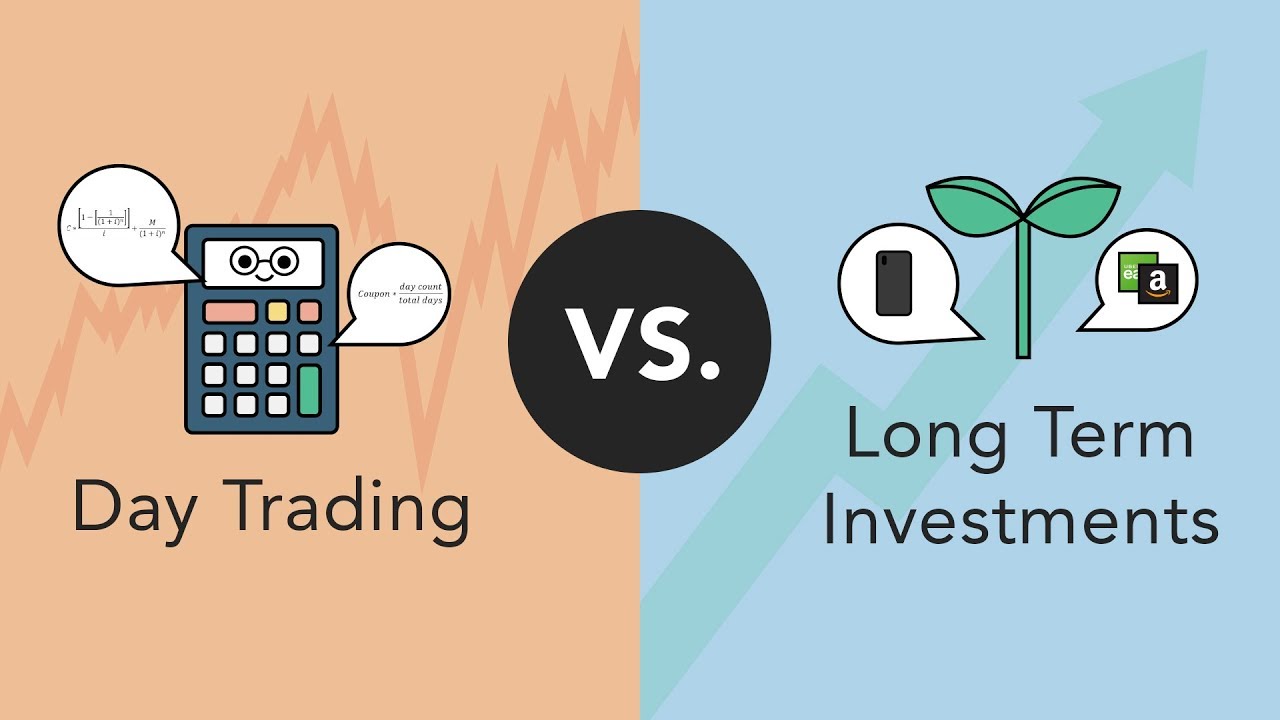
Think of the long-term investor as a gardener planting a tree. They’re not looking for a quick harvest. They’re carefully selecting a sapling (a stock, an ETF, a bond) they believe will grow strong and tall over many years. They plant it, they water it occasionally, and they let it do its thing. They understand that there will be seasons of drought and seasons of abundance, but their faith is in the long-term growth of the tree itself.
Long-term investing is all about buying and holding assets for an extended period, often years or even decades. The goal isn’t to profit from short-term price fluctuations, but to benefit from the compounding growth of the asset over time. The primary focus is on the fundamental value of the company or asset.
Focus on Fundamentals: An investor will spend time researching a company’s business model, its management team, its financial health (revenue, profit margins, debt), and its long-term growth prospects. They’re asking questions like: “Is this a company that will be relevant in 10 or 20 years?” “Does it have a strong competitive advantage?”
This approach is ideal for people who are patient, have a long time horizon, and are comfortable with the idea of market ups and downs. It’s for people who want to build wealth steadily over time without the stress and time commitment of actively managing their portfolio. If you’re planning for retirement in your 20s or 30s, this is likely the path for you.
The Short-Term Trader: The Market Surfer
Now, imagine the short-term trader as a surfer. They’re not interested in the ocean itself; they’re interested in catching the waves. They’re looking for the perfect swell, riding it for a short time, and then jumping off before it crashes. They’re focused on the immediate movement and momentum of the wave, not the long-term tides of the ocean.
Trading is all about profiting from short-term price movements. A trader’s time horizon can range from a few seconds (high-frequency trading) to a few days or weeks. The focus is on technical analysis—studying charts, patterns, and indicators to predict where the price of an asset is headed next.
Technical Analysis: Traders rely on charts and indicators like moving averages, RSI (Relative Strength Index), and MACD (Moving Average Convergence Divergence) to make decisions. They’re looking for patterns in price and volume to identify entry and exit points.
Trading is for people who are disciplined, can manage their emotions, have a strong grasp of technical analysis, and are comfortable with a higher level of risk. It’s a skill that requires a significant time commitment to learn and master. It’s not a get-rich-quick scheme, but a profession that requires dedication and a cool head. It’s for people who enjoy the thrill of the market and have the time to dedicate to it.
The Core Differences Summarized
Let’s break down the key distinctions between the two approaches:
Time Horizon: Years/Decades (Investing) vs. Seconds/Days/Weeks (Trading).
A Hybrid Approach: Can You Do Both?
Absolutely. Many people find success by adopting a hybrid approach. They might have a core portfolio dedicated to long-term investing for retirement, using low-cost index funds and ETFs. This “set it and forget it” part of their portfolio is the foundation of their financial future.
Then, they might allocate a small percentage of their total assets—say, 5% or 10%—to a separate “play” or “speculation” account for trading. This allows them to scratch the itch of wanting to be more active in the market, without jeopardizing their long-term financial goals.
This hybrid model gives you the best of both worlds: the peace of mind and steady growth of long-term investing, coupled with the excitement and learning experience of short-term trading.
The Bottom Line: Start with the End in Mind
Before you decide whether to invest or trade, ask yourself these questions:
What is my goal? Am I saving for retirement in 30 years, or do I want to generate a side income in the next few months?
For most people, especially those who are just starting out, long-term investing is the wiser and more stable path. It’s less stressful, requires less time, and has a proven track record of building significant wealth over time. The principles of compounding, diversification, and dollar-cost averaging are powerful tools for anyone looking to secure their financial future.
Trading is a specialized skill that requires a significant commitment to learning and a high tolerance for risk. It’s not a shortcut to wealth. For every story of a successful trader, there are countless others of people who lost money.
So, take the time to reflect on your goals and your personality. There’s no single “right” answer, but by understanding the difference between investing and trading, you can choose the path that is right for you and embark on your financial journey with confidence.


